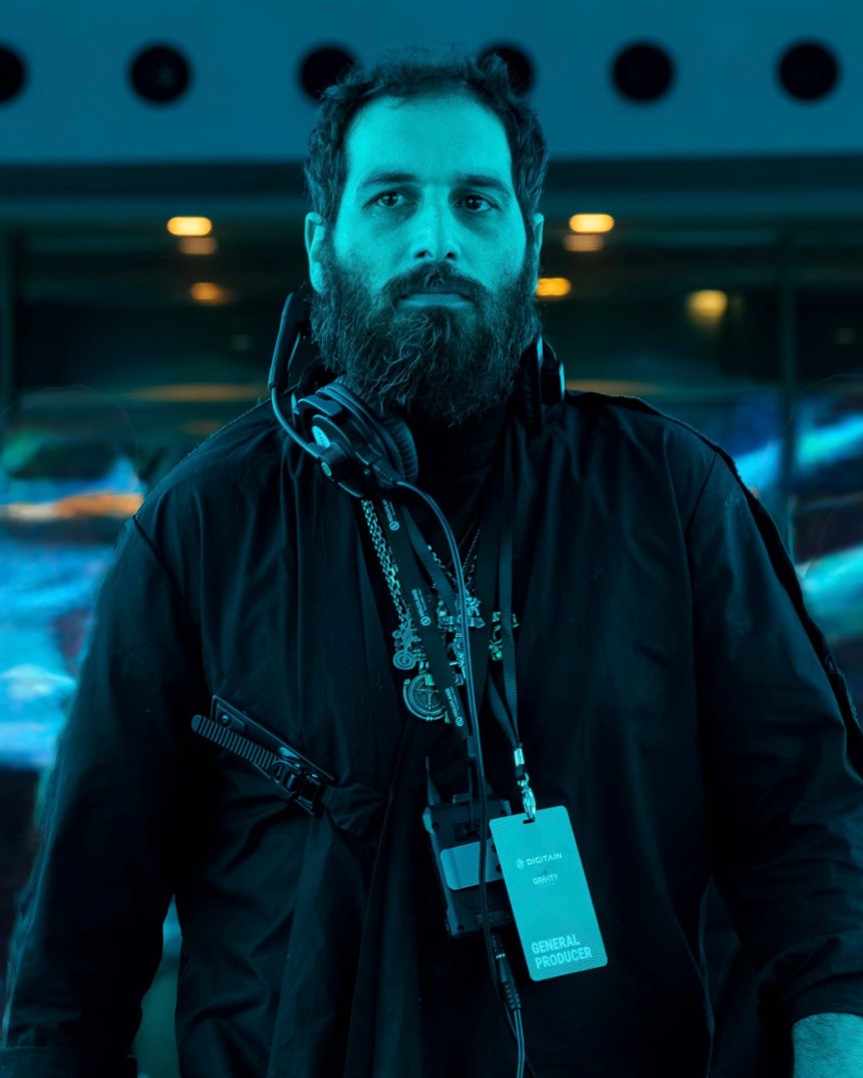
Aramayis Hayrapetyan: From Idea to Screen
Aramayis Hayrapetyan: From Idea to Screen
Aramayis Hayrapetyan: From Idea to Screen
22 min read
22 min read

[No. 004]

Your journey began in editing and television. What did that experience give you in terms of becoming a director and producer?
It was a very important experience for me. In general, I believe that a director should have as comprehensive an understanding as possible of all aspects of audiovisual production. When you understand the specifics of each department’s work, you can define tasks more clearly and collaborate with the team more effectively.
Editing gave me a different perspective on the frame. It taught me not only to see the value of an individual shot but also to understand how a story is built through the connections that emerge between shots. Very often, it is in the editing room that you realize how to change the rhythm of a scene, strengthen emotion, or create new meaning from material that has already been filmed.
Moreover, experience in editing is extremely useful during production. When you have a clear vision of the final result, you avoid unnecessary shooting, use the team’s time more efficiently, and focus only on the material that is truly necessary to tell the story.
When and how did you realize that a frame is not merely a technical task, but a way of thinking? Was there a particular moment, project, or experience that changed your relationship with the image?
I do not think it happened at one specific moment. Over time, through experience and work, I came to understand that a frame is not simply a tool for creating a beautiful image. It is a way of thinking, storytelling, and conveying emotion.
When you begin to look at an image not from a technical perspective but from a conceptual one, you realize that every frame can express an idea, a mood, and an attitude. It was probably during that process of maturation that my relationship with the image changed.
Today, which role do you identify with most: director, producer, or someone who builds a complete experience?
Today, it is difficult for me to separate these roles from one another. Of course, first and foremost, I consider myself a director because the process of creating stories, shaping ideas, and bringing them to life on screen is what interests me most.
However, in the Armenian reality, if a director wants to realize their own ideas, they often have to think like a producer as well. You must be able not only to create but also to build the conditions that allow the work to become reality. For that reason, producing has long become a natural part of my work.
At the same time, through Gravity Production, we realize not only my own projects but also those of other authors and directors. In those projects, I am often involved primarily as a producer.
As a result, I see myself today more as someone who builds a complete creative process—from the birth of an idea to its realization.
When you founded Gravity Production, what gap or need did you see in the Armenian production landscape?
The idea for Gravity Production emerged very naturally. Our goal was to create a platform that would not simply provide production services but would become a creative partner from the development stage of an idea through to the final result.
We wanted to bring together strong professionals, modern technical capabilities, and creative thinking within one system.
I think the Armenian market long lacked production companies that not only execute orders but also participate in the creation of projects, propose solutions, and take responsibility for the final outcome. Gravity was built around exactly this approach and continues to evolve in that direction.
Your projects often involve large-scale productions—teams, equipment, stages, lighting, rhythm. What is the most difficult part of bringing such projects to life?
Many people think that the most difficult part is managing equipment, budgets, or large teams. In reality, the hardest part is bringing together numerous people, resources, and processes around a single shared vision.
When dozens of professionals are involved in a project, each has their own perspective, working rhythm, and area of responsibility. All of these elements must be aligned so that everyone moves in the same direction and works toward the same goal.
Very often, a project begins as a creative idea, but during its realization it passes through many technical, organizational, and financial stages. It is important not to lose the original feeling that inspired the project in the first place.
Ultimately, large projects are not only about technology or organization. They are about people, trust, and shared responsibility. When that system functions properly, even the most complex ideas become reality.
When working with a large team, what quality matters most to you in people: professionalism, flexibility, taste, or trust?
All of these qualities are important, but if I had to choose one, it would be trust.
In large projects, everything changes very quickly, and it is important to work with people you can trust both professionally and personally.
In my experience, strong teams are built not only on skills but also on mutual trust. When that exists, flexibility, responsibility, and professionalism naturally follow.
How would you describe your visual language? Is there something that is always yours, regardless of the project format?
I do not think I have a visual language that looks externally the same across all projects.
For me, every story requires its own form, rhythm, visual solutions, and often its own scale. Some ideas can be conveyed through a single frame or within a single space, while others require far more complex execution, extensive teamwork, multilayered production processes, and a more ambitious technical and creative approach.
I am also attracted to ideas that initially seem difficult or even almost impossible to realize. Those are often the projects that force us to find new solutions, expand creative boundaries, and create richer and more impactful visual worlds.
Perhaps that is the thread that connects my different projects, whether they are films, music videos, or commercial work.

What changes have you noticed in the Armenian visual landscape in recent years in terms of taste, quality, or ways of thinking?
I believe that the Armenian visual landscape is moving forward steadily, albeit in small steps, in every direction.
Year by year, both technical quality and professional standards are improving. More attention is being paid not only to creating beautiful imagery but also to ideas and storytelling.
Of course, there is still much to be done, but the important thing is that progress is visible.
In cinema or visual arts, are there people whose work particularly interests or inspires you? What attracts you most—their thinking, form, scale, or emotional impact?
I cannot say that I closely follow the path of any particular author or creator.
I am more interested in works that bring new ways of thinking, new perspectives, and new approaches, regardless of who created them.
Art, cinema, and visual culture are constantly evolving, and with those changes come new professionals, new names, and new ideas. I believe one of the most important conditions for the development of any field is the continuous emergence of new generations and new ways of thinking.
That is why I am most drawn to people and projects that strive to move forward, experiment, and offer their own unique perspective.
What do you think makes Armenian production interesting on the international stage?
Our greatest advantage is ourselves.
Armenia is a small country, but it possesses deep cultural layers, a complex history, powerful human stories, and a unique environment that can be fascinating and fresh for international audiences.
At the same time, Armenian production is gradually reaching a level where it can compete not only through ideas but also through the quality of execution. In recent years, strong professionals and teams have emerged who are capable of realizing highly ambitious and complex projects.
However, I believe that what can truly distinguish us internationally is not trying to imitate others, but finding and expressing our own voice. When we combine international quality with our own identity, that is when we become genuinely interesting and competitive.
What new approaches or changes do you expect to see in production and filmmaking in the coming years—in terms of technology, formats, or storytelling language?
I think filmmaking will increasingly move toward immersive experiences, where audiences are no longer just viewers but become involved in the story and visual world in some way.
Technological development is already changing how people interact with images, and I believe this process will continue.
At the same time, regardless of technological changes, the most important thing will remain the idea itself.
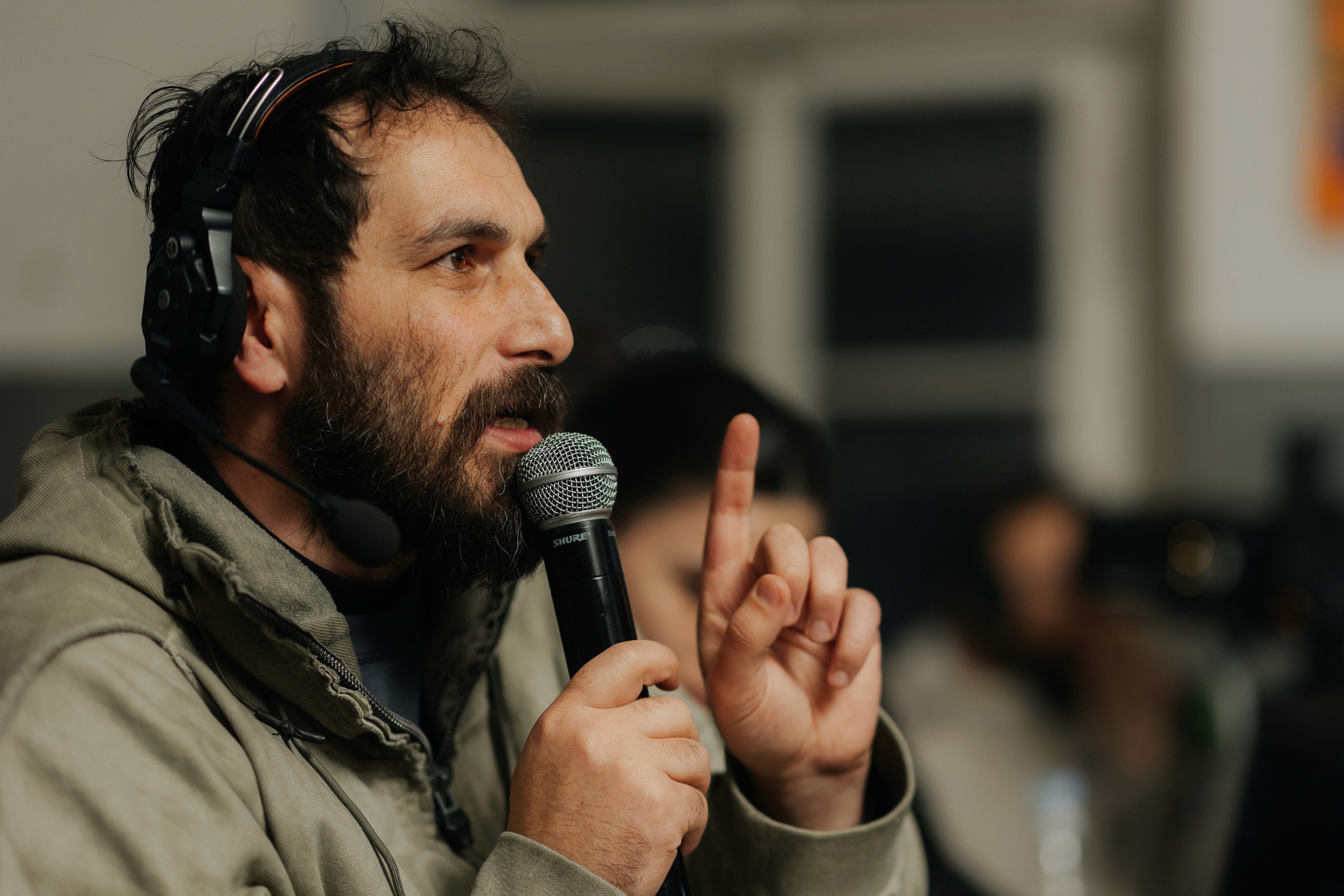
You have worked with various artists and brands. How do you find a balance between a client’s needs and your own creative approach?
For me, it is very important that all creative and professional matters are discussed at the very beginning.
Before a project starts, we try to clearly understand whether we share the same expectations regarding the final result, the quality of work, and the principles of collaboration.
If fundamental disagreements arise at the beginning, we try to resolve them through discussion. But if we realize that we cannot find common ground, we often choose not to enter into that collaboration or to decline the project altogether.
I believe that is better than facing problems later that could affect the quality of the work.
Ultimately, quality, professionalism, and the principles on which our production company is built are our priorities. If there is mutual understanding around those values, creative balance usually forms naturally.
In your opinion, what should a good music video or commercial do first and foremost: sell, tell a story, impress, or create a feeling?
I think a good music video or commercial should be able to do all of these things at the same time.
I know you are currently working on a film concept and screenplay. What kinds of stories or themes is it developing around, and what is most important to you at this stage: finding the right story, the right language, or the inner state from which the film must emerge?
I usually strive to tell stories that are personally meaningful to me. I do not think much about how they will be perceived; I create them according to what I genuinely feel.
The current film has an anthology structure and consists of five different stories about different destinies.
At the moment, the project is in the screenplay development stage.
What is currently the most exciting and, at the same time, the most concerning thing for you creatively?
At this moment, what interests me most is telling a large-scale story through a feature-length film.
It is a difficult and lengthy journey, but that process is what excites and occupies me the most creatively today.
IG: @hayrapetyanaramayis | gravityproduction_evn