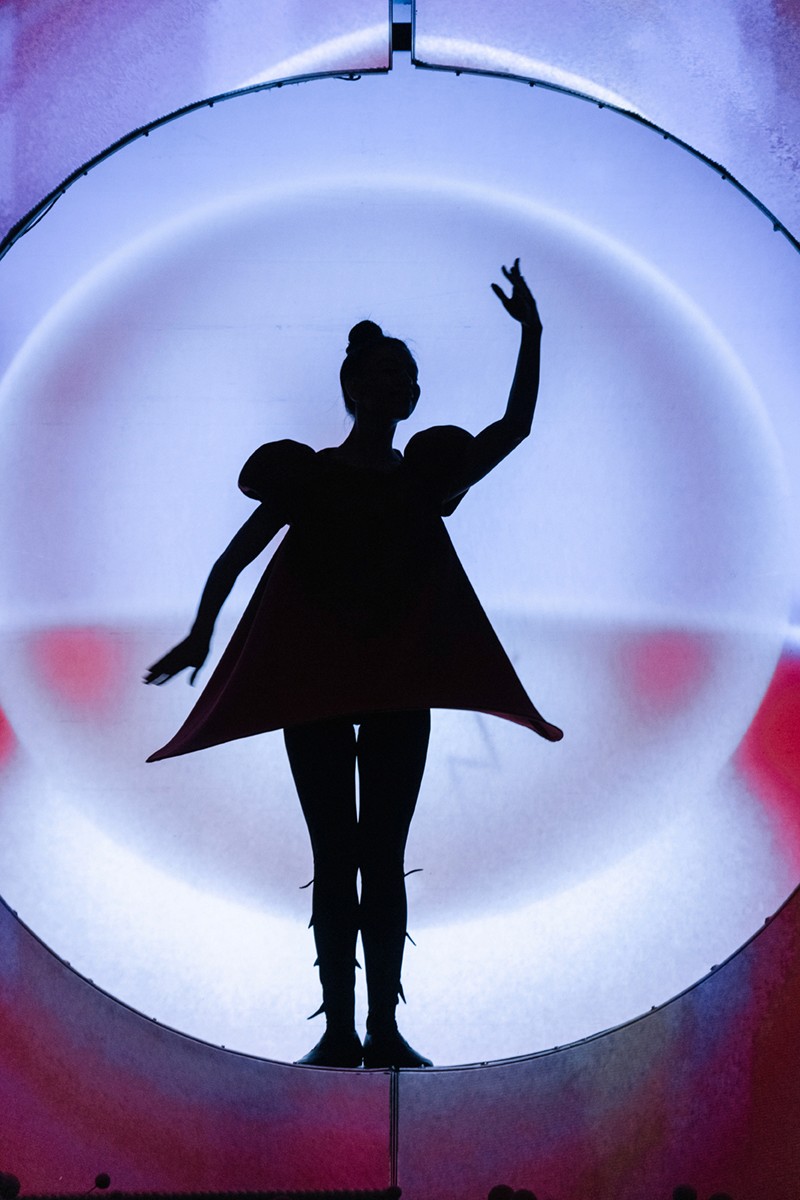
Yerevan Drama Theatre — A Producer's Account
Saint-Exupéry wrote The Little Prince in 1943, in exile, in New York, far from the war and far from home. It reads like a children's book. It functions like philosophy. It has been translated into more languages than almost any other work of literature, and it does something very few books manage: it means something completely different depending on how old you are when you read it. Children absorb it without knowing why it stays with them. Adults keep it on their shelves and return to it during difficult years, recognising in it something they've been trying to articulate about their own lives.
That double life — a story operating simultaneously on two levels — is what makes the book almost impossible to adapt badly, and very hard to adapt well. The trap is obvious: lean too far toward the children and you lose the philosophy; lean too far toward the philosophy, and you lose the lightness, the poetry, the thing that made people love it in the first place. Grigor Khachatryan walked that line without losing his footing, and that, in itself, is the achievement.
But I'm getting ahead of the story.
We did not set out to make The Little Prince. We set out to solve a New Year's problem.
New Year's weekend in Yerevan is a season of obligation. Parents need somewhere to take their children. Theatre is an option — not always the chosen one. I had been talking to parents around the city, asking about their experience at children's shows. What I heard wasn't encouraging. Adults in darkened halls, phones out, waiting for it to end. Pirated Disney projected onto a stage. Songs with Santa Claus. The logic of fulfilment rather than art. Some theatres had trained audiences to expect exactly this: two thousand drams, a partially costumed show, a familiar title. Why do more when less works?
I wanted to make something that would make parents forget to check their phones. Khachatryan felt exactly the same. The trouble was that every suggestion our marketing lead Narek Qtoyan offered — and he offered many — couldn't break through. We kept setting them aside. The conversations were, I admit it freely, anxiously avoided. Eventually Qtoyan ran out of patience. Looking away, with what I can only describe as a bitter voice, he said: "Do The Little Prince if you hate everything I propose."
It hit us both like something physical. We looked at each other. The kind of silence that arrives when something has already been decided.
The Little Prince. The title that reaches exactly the audience we wanted — the smart parent, the smart child. Great literature with a name everyone already loves. A story that had somehow never been produced properly on an Armenian stage. The only problem: we didn't have anyone who could do it the way it needed to be done.
Khachatryan left the room with a phrase I still haven't fully decoded: "Ed, if you can — figure out whether we do it." Trust or a dare. Either way, I was alone with the question.
The answer arrived the next day, by accident.
Izabela Chichonska — a Polish production designer and art director whose work spans high-budget international film productions, an architect by training — happened to be visiting Yerevan. I had met her recently and, on impulse, invited her to see the theatre. I had no agenda. I assumed she would look around politely and leave.
We had coffee. She smiled — Izabela is one of those people whose energy fills a room without occupying it — and asked what we were thinking of making. I had nothing prepared. I said the first thing that came to mind: "It would be cool to do The Little Prince."
She didn't pause. "That's a dream of mine."
I nodded, said nothing, and privately assumed she meant someday, somewhere with a real budget. An awkward silence followed, broken by her friend: "Maybe you should stay in Armenia and work on it."
Izabela's answer was short. "Sure thing."
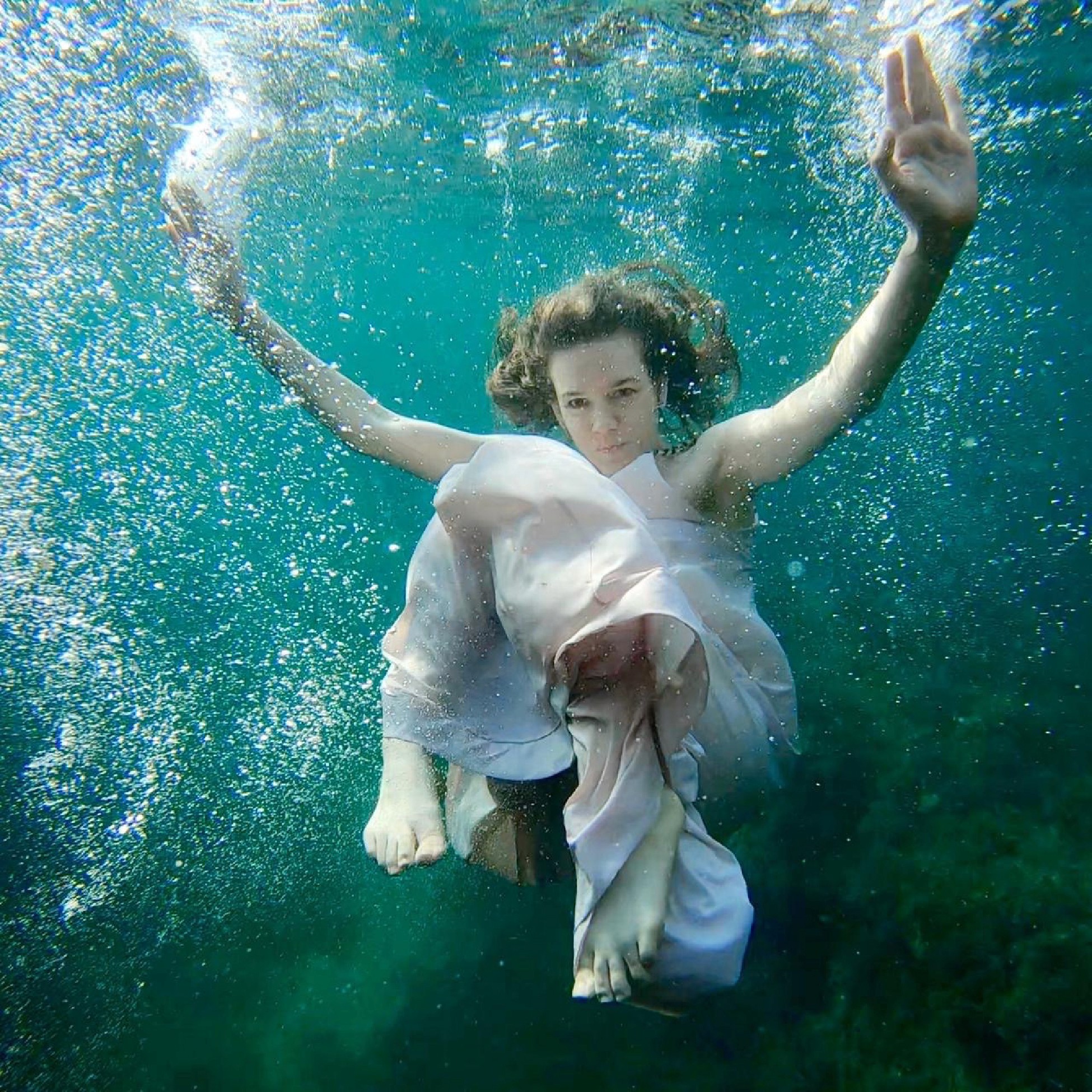
Izabella Chichonska
The days that followed, I spent mostly trying to talk her out of it. No serious budget. No technical infrastructure. No materials. I listed every obstacle I could think of. She was entirely unmoved. "My vibe is enough," she said.
When I showed Khachatryan her portfolio, he didn't hesitate for a moment — not even troubled by the fact that she had no theatre experience. A week after she returned to Rome, she called as though a contract already existed, demanding my producer's notes. I gave her the one constraint I knew for certain: "Whatever you do, it has to be minimalistic multimedia. No Cirque du Soleil engineering. Use what you're extraordinary at."
She nearly shouted at me. "Of course it does — have you seen the book's illustrations?"
I called Khachatryan. Told him she was calling and yelling at me. His response, without hesitation: "Well, fuck it — we have to do it. I don't know how, but fuck it."
I texted her: "Okay. Let's do it."
She replied that she was already packing, and that while she was in transit, we should go through her moodboards.
While she was traveling, I had a dream. We were making The Little Prince, and it was an animation — live, projected, on stage. I said nothing when she arrived. She came with her own position first: we must not attempt to replicate Saint-Exupéry's famous watercolour illustrations. The rights are heavily protected, and beyond that, replication would be the wrong instinct entirely. "It has to be cosmic," she said. "Antigravity. Science fiction in feeling."
We spent a full day in discussion. When ideas ran dry, we went through her moodboards together. There was one image — easy to overlook, not the most striking thing on the board — of a hole. Khachatryan stopped at it. Said: "That's it."
Neither Izabela nor I liked it. For days we tried to move him elsewhere. He was immovable. We grew quietly frustrated.
Then one morning, mid-argument, I said the word "Kandinsky" — by accident, because I had recently bought a chair called the Wassily and the name was sitting in my head.
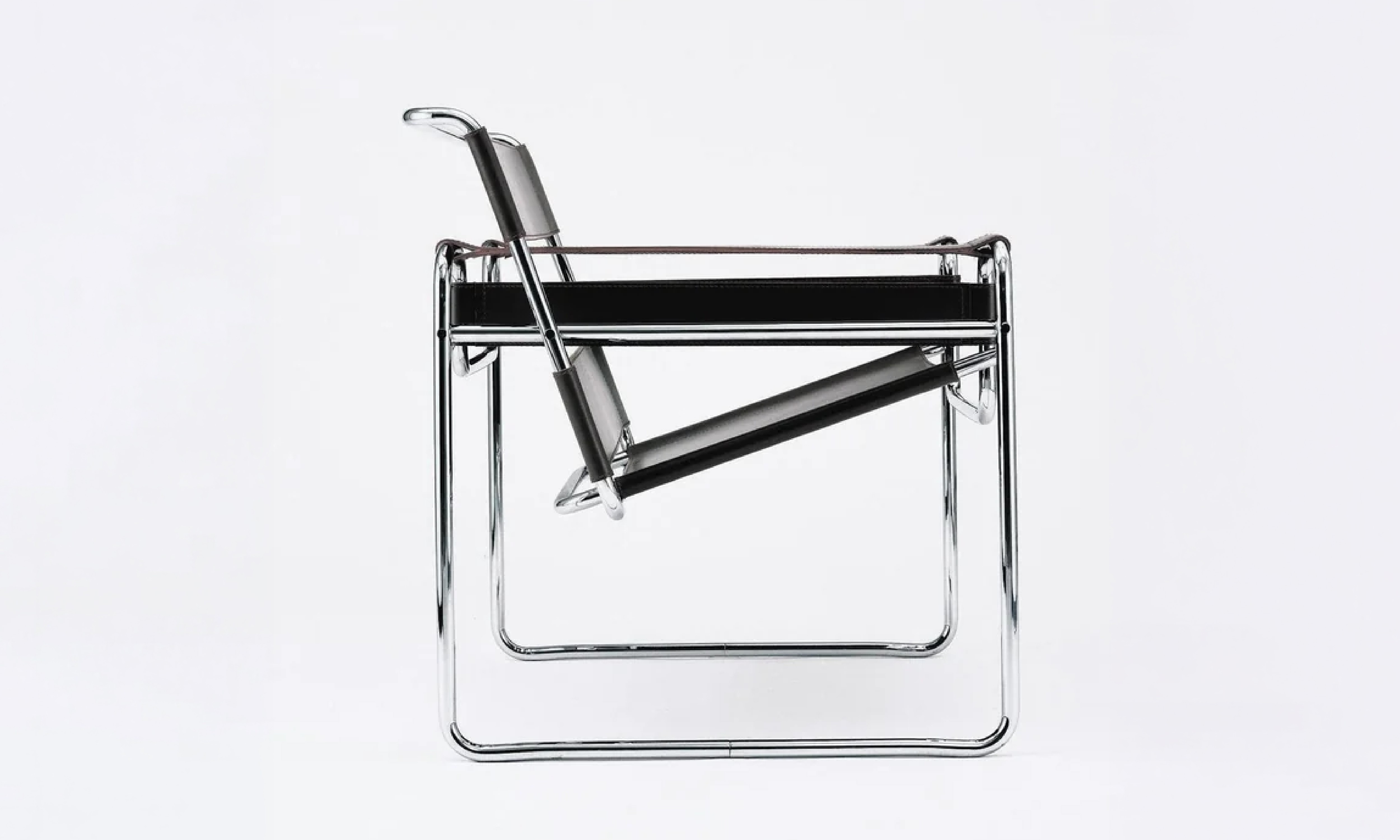
Wassily Chair Designed by Marcel Breuer in 1925–1926
Izabela froze. The freeze was contagious. Neither of us can say who understood it first, but we both understood it at the same moment: the hole wasn't a hole. It was a radius. A globe. A point of infinite possibility. Khachatryan had seen it before either of us could — that's what directors are for.

Composition 8 - Abstract by Wassily Kandinsky 1923
Kandinsky was then more or less forgotten, buried under the daily work of design, materials, engineering, animation, music, script. We didn't think of it again until we stood in the theatre after the premiere and looked at what we had built. Built from Kandinsky's shapes, the stage had remembered what we forgot.
Animation had been part of the concept from the beginning. The question was who. I thought of Gor Sahakyanc — young, exceptionally gifted, the grandson of Robert Sahakyanc, the legendary Armenian animator whose work is known internationally. To get Gor into the room without frightening him with the word theatre, I called my close friend Andranik and, I'll admit it, lied to him — told him I wanted him as co-producer if he could bring Gor along. I lied because we're that close, and I knew The Little Prince would seduce any artist if they got close enough to it.
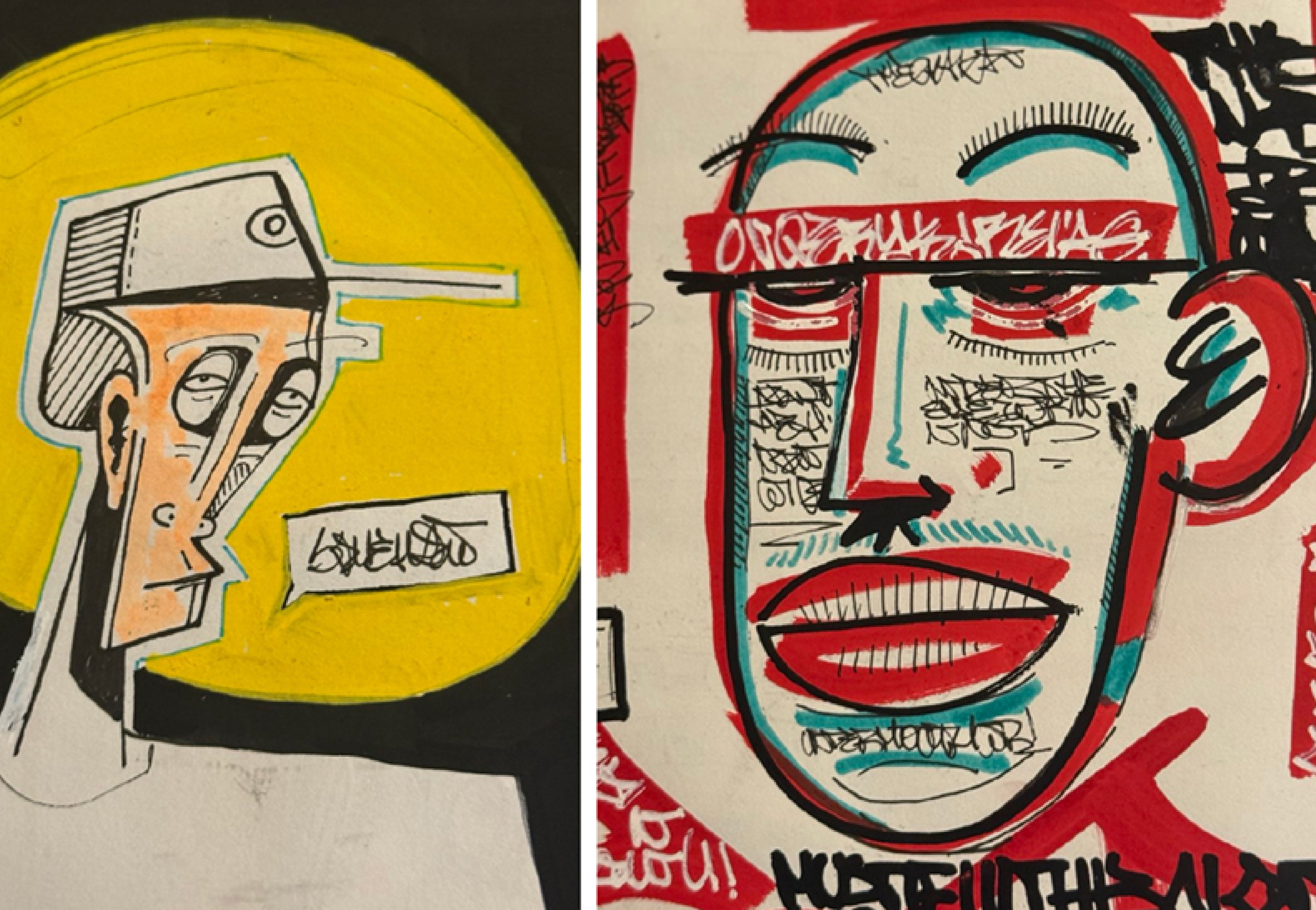
Gor Lyoch Robert Sahakyanc
It worked. Both came. Within two minutes, Gor and Izabela were in their own conversation. Andranik and I had become unnecessary figures in the room. All either of them needed was Khachatryan. The three of them took over my office and made it a real production room.
Watching that chemistry, I knew I needed an original score. Not licensed music, not borrowed themes — something written specifically for this production and this world. But a composer couldn't be approached like a contractor. The charge in the room was too specific for that. It had to arrive on its own.
So I waited. For days I kept noticing the same figure appearing in the margins — at lunch, in the corridor, at the smoking area. Small talk. Quiet presence. Then one day, without being asked, he said: "I'm writing new music."
I invited him to a production meeting. He sat in a dark corner and listened while Khachatryan talked through the adaptation. At a certain point he looked up and said, with a specific mixture of anxiety and excitement I recognised immediately: "Guys, you're fucked."
He was right, and he was in. His name is Tigran Paravyan. Izabela later called him our big little prince — and it stuck.
The casting of the title role was the last open question, and the most delicate. I had someone in mind from early on, but I couldn't say it — she was a friend, and naming her would look like favouritism. I stayed quiet and let the conversation find its own way.
The discussions kept circling back to a more fundamental question: what is the Little Prince, exactly? Not a gender. Not a size. A condition. A state of being — someone so constitutionally out of place on this planet that the planet itself seems like the wrong address.
One morning, coffee and a cigarette at a window, a casual conversation about how the Little Prince should look. Mid-sentence I glanced down at the street and saw an actress walking past. I said nothing.
Izabela — who didn't know her, had never met her — looked out the same window and said: "There. That's how the Little Prince should look."
The actress was Diana Malenko.
We went to Khachatryan. He shook his head. "She can't play the Little Prince." We asked why. He said: "Because she is out of this planet. She is the Little Prince. Don't take my work — she is perfect."
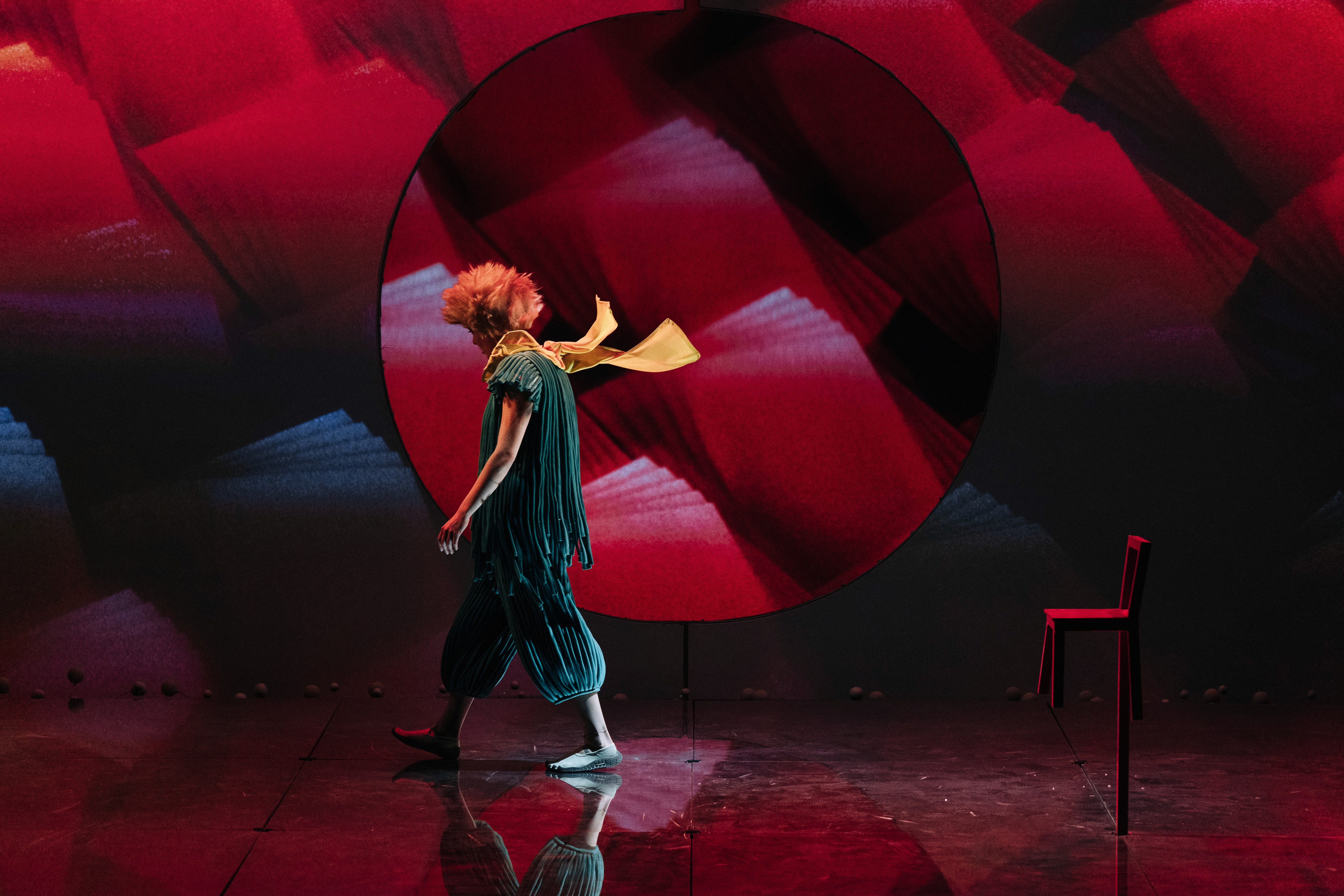
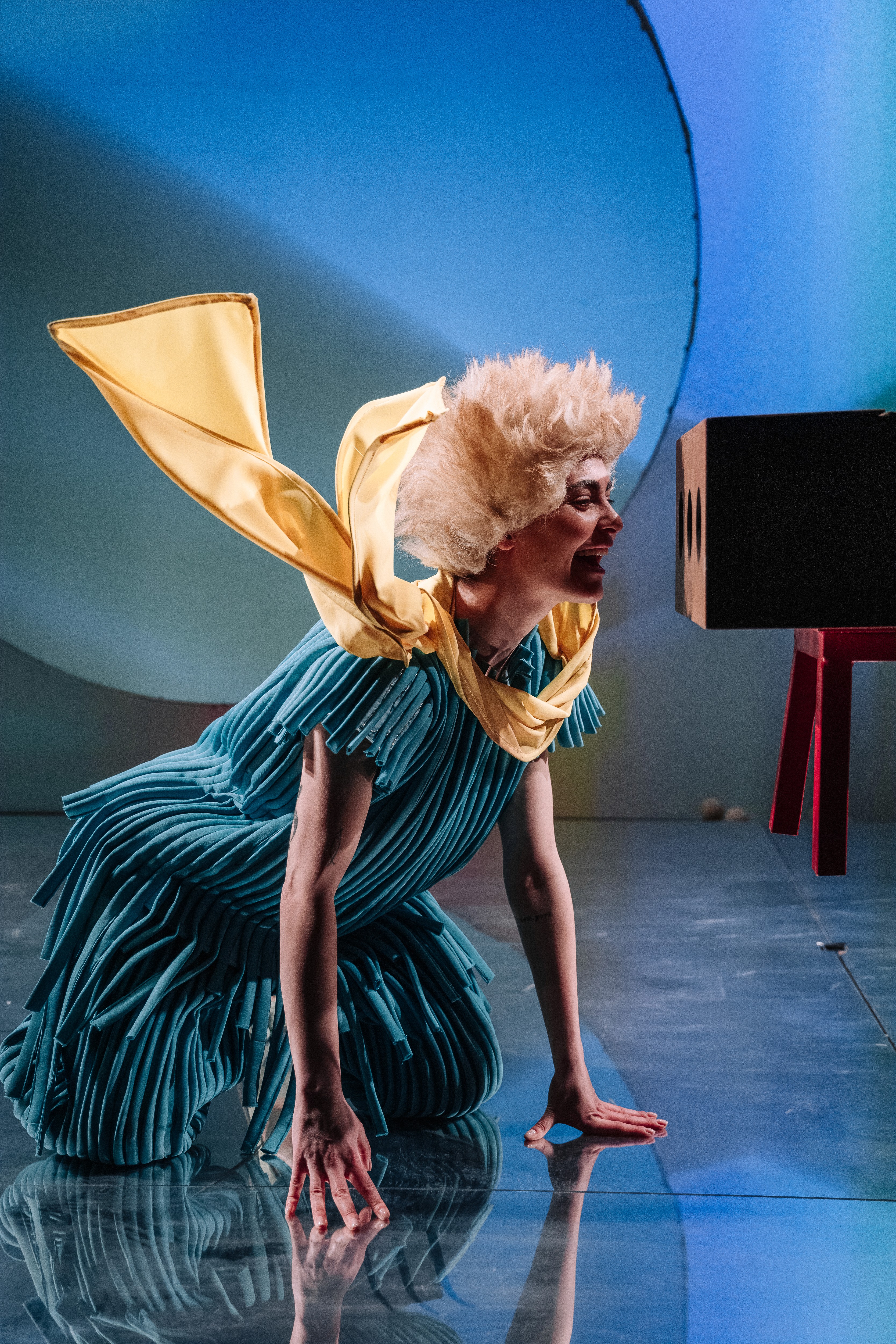
He was right about that too. Diana's Little Prince carries no performance of childhood — only its purity. There is no naivety in her playing, only a specific kind of clarity that adults spend their lives trying to recover. Every question she asks on stage feels directed not just at the other characters but at the entire room. Her presence is almost weightless and yet carries an interior gravity that catches you off guard.
By the time the Fox scene arrives — Diana and Lidia Grigoryan alone on stage, the rest of the world receding — the production's breathing changes completely. It becomes the most important conversation: about attachment, about what it means to be responsible for what you have tamed. Grigoryan's Fox doesn't deliver those famous lines as quotation. She delivers them as lived truth, worn smooth by loss. That combination — Diana's luminous openness and Lidia's quietly exhausted wisdom — is the emotional centre of the production. The moment when the audience stops being an audience.
On the work itself
What Saint-Exupéry understood — and what our adaptation had to honour — is that The Little Prince is not a story about childhood. It is a story about what gets lost when childhood ends: the capacity to see what is essential, to ask the questions that adults have stopped asking because the answers became inconvenient. The Pilot meets the Prince in the desert — two people stranded far from where they belong, each restoring in the other something that had gone quiet.
The Prince's journey through the planets of grown-ups is a precise taxonomy of the ways adults stop being present to their own lives. The King who commands what will happen anyway. The Businessman who counts stars he cannot feel. The Conceited Man who needs applause from a world with no one left in it. The Lamplighter, loyal to a rhythm that no longer makes any sense. Each planet is a mirror. Each one is someone we know. Armen Barseghyan said it plainly after a rehearsal: "In life too there are people who believe they decide everything. But in the end, a person is just a small particle of the world." He was talking about his character. He was also talking about something larger.
Khachatryan's staging never overloads any of this. He doesn't try to impress with technical noise — he creates an atmosphere in which every movement, every silence, even the direction of a glance carries meaning. Visual effects here are never self-congratulatory. Chichonska's world and Sahakyanc's animation serve the feeling rather than demonstrating themselves. The geometry is warm. The cosmos is intimate. Paravyan's score moves between the galactic and the fragile without announcing itself, making space for the audience to feel rather than telling them what to feel.
The result is a production where a child sees a fairy tale and an adult sees a philosophical mirror of their own life — which is precisely the hardest thing to achieve with this material, and precisely what Khachatryan managed. As one critic wrote after the premiere: the production doesn't try to make the audience cry on its behalf. Everything is built on restraint. And it's exactly that restraint that, by the end, becomes a knot in the throat.
Some nights, someone in the audience can't hold their applause until the end. That is not a breach of etiquette. That is the moment theatre stops being a performance and becomes a shared experience. Those moments are exactly why we made it.
The show does not end when the curtain falls. It continues in the person walking home through a Yerevan night, glancing at a random star, thinking about their one rose. That is the only measure of success that matters to me.
Running time: 1 hour 20 minutes
Cast:
The Pilot — Vladimir Msryan
The Little Prince — Diana Malenko
The Rose — Lucia Hovhannisyan
The King — Armen Barseghyan, Honoured Artist of the Republic of Armenia
The Businessman — Karen Miridjanian
The Conceited Man — Armen Mesrobyan
The Drunkard — Haykuhi Khudaverdyan
The Lamplighter — Nikolay Avetisyan
The Snake — Emma Manukyan
The Fox — Lidia Grigoryan
Creative Team:
Director — Grigor Khachatryan
Production Design & Art Direction — Izabela Chichonska
Animation — Gor Sahakyanc / Sahakyanc Studio
Original Score — Tigran Paravyan
Co-Producer — Samvel Grigoryan
Producer — Eduard Mkhitaryan
Currently in repertoire at the Yerevan Drama Theatre named after Hrachya Ghaplanyan
https://www.ydt.am/
@yerevan_drama_theatre
Photographer: @frg.le